Hey PS+R Crew!
We want to reintroduce the team guiding your care, training, and performance behind the scenes at PS+R!
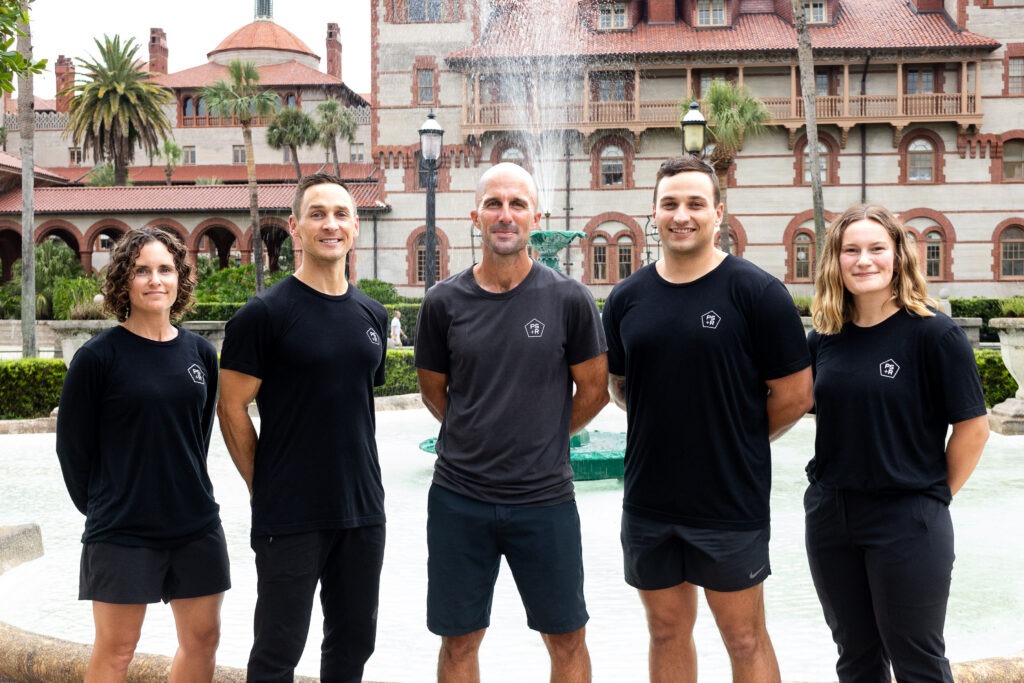
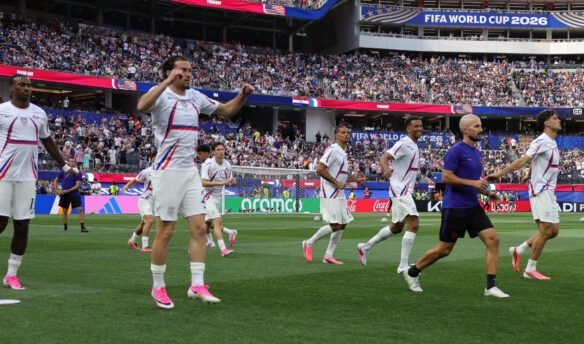
Steve (Middle): Owner of Performance Science & Rehab. While he may not be in the clinic daily, Steve continues to support both the men’s and women’s Sporting Jax teams alongside his role with the US Men’s National Soccer Team.
Trent (To Steve’s Left): After nearly a decade in professional basketball as a physical therapist and strength & conditioning coach, Trent now splits his time between St. Augustine and Michigan. He is the founder of The Tendon Lab, where he specializes in Achilles and patellar tendon rehabilitation.
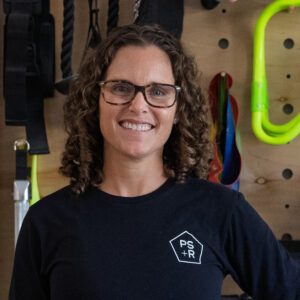
Libby (Outside Left): A fan favorite at PS+R, Libby continues to treat patients regularly while focusing on teaching physical therapy students in Charleston and conducting research on hip dysfunction. We are grateful she brings this high-level research and expertise back to St. Augustine to treat complex hip pain and injury.
Austin (To Steve’s Right): At PS+R for just over a year, Austin specializes in late-stage rehab—focusing on ACL recoveries, overhead, and rotational athletes. By bridging physical therapy with strength and conditioning, he helps active individuals build the movement quality and power needed to safely return to sport.
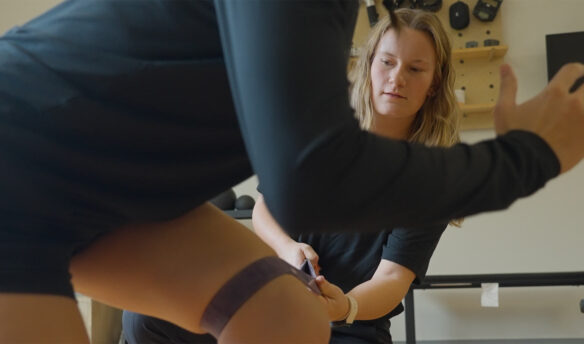
Sarah (Outside Right): After assiting with PS+R’s administrative and marketing operations behind the scenes, Sarah is back seeing patients in the clinic! She brings experience working with collegiate athletes recovering from lower body injury and surgery, and is currently expanding her care offerings into pelvic floor therapy.
THE SCIENCE OF LONGEVITY: WHY YOU NEED POWER, NOT JUST STRENGTH
When most people think about staying fit into their 40s, 50s, and beyond, they focus on building strength or endurance. But emerging research points to a different metric that dictates dynamic balance, fall prevention, and athletic longevity: Muscle Power.
While strength is about how much force you can produce, power is how quickly you can produce it (Force×Velocity).
The Hidden Shift in Midlife
According to researchers at Harvard Medical School, age-related muscle loss (sarcopenia) begins earlier than most realize—starting around age 35 at a rate of 1% to 2% per year.
Because overall scale weight often stays stable, most adults don’t notice that muscle tissue is actively being replaced by fat. More importantly, your body selectively loses Type II (fast-twitch) muscle fibers at a significantly faster rate than slow-twitch fibers.
The Result: You don’t just get weaker as you age—you get slower. Muscle power drops twice as fast as absolute muscle strength.
Why Speed Matters for Fall Prevention & Longevity
Tripping over a curb or losing balance on the court requires a fast, reactive step to catch your center of gravity. That instant recruitment depends entirely on your fast-twitch fibers.
A multi-center study published in Clinical Interventions in Aging evaluated structured power training (exercises performed with high concentric velocity). The findings were definitive:
- Immediate Explosive Gains: High-velocity power training significantly improved lower-body power output, agility, and dynamic balance compared to standard slow lifting.
- 1-Year Sustainability: Participants who continued power training maintained and expanded their physical independence and performance a year later.
How We Train Power Safely: Power work isn’t about jumping off high boxes. It comes down to concentric intent—moving a load dynamically on the way up, even if it’s controlled on the way down. Using medicine balls, kettlebells, and velocity-focused lifts allows us to keep your fast-twitch motor units active without stressing your joints.
CELLULAR LOGISTICS: THE REALITY OF MUSCLE HYPERTROPHY
Whether your goal is recovering from an injury or building lean mass in your 40s, it’s easy to get impatient. But natural muscle growth operates on an internal biological clock that cannot be rushed.
Here is what is actually happening at the cellular level:
- Signal vs. Construction: A hard workout triggers anabolic signaling within hours, but actual protein construction takes weeks. Your cells must first build new ribosomes (the cellular machinery that assembles protein) before meaningful fiber growth occurs.
- The 3-Week Lag: Visible hypertrophy typically lags about three weeks behind your training block, appearing only after early exercise-induced muscle damage resolves.
- Calories Aren’t the Shortcut: A kilogram of muscle contains roughly one-quarter of the energy found in a kilogram of fat. Once your body has enough protein and a slight energy surplus, extra calories won’t speed up protein synthesis—they simply get stored as fat.
The biological limit on monthly muscle growth isn’t a lack of willpower; it’s cellular logistics. Consistency over months—not quick fixes over days—is what yields lasting physical changes.
Want to dive deeper into the science? Read the research further:
- Check out the full 1-year study on power training in Clinical Interventions in Aging.
- Read Harvard Medical School’s guide on Sarcopenia and Fast-Twitch Muscle Decline.
READY TO OPTIMIZE YOUR REHAB & PERFORMANCE?
Whether you need to bridge the gap between injury and sport, build high-velocity power, or fix underlying joint pain, our team is here to help.